
Summary: Semaglutide has a long half-life of approximately one week and leaves the body after 5–7 weeks, causing its effects to slowly decrease over time. How Long Does Semaglutide Stay in Your System is useful to understand when stopping, managing side effects, or planning to become pregnant.
________________________________________________________________
How Long Does Semaglutide Stay in Your System? Complete Overview
Ozempic Withdrawal Symptoms | How Long Does Ozempic Stay in Your System? | How Long Does Wegovy Stay in Your System?
Semaglutide has become a popular treatment for type 2 diabetes and weight management. Since the drug lasts a long time, one common question is: how long does semaglutide last in the body after you stop taking it?
The answer is that semaglutide has an elimination half-life of about a week. Blood tests show that people still have semaglutide in their bodies after about 5 weeks. However, different formulations of the drug may last even longer in some people. There are many types of semaglutide with different formulations, administration methods, and treatment purposes. The best telehealth services have licensed professionals who offer virtual care, support, and check-ins, and provide digital health services all from the comfort of your home.
This is slowly decreasing over this entire time. By the end of the 5 weeks, the drug isn’t still there and active. Understanding this process will show you what happens if you stop the treatment, why missing doses lead to severe semaglutide side effects, and why doctors need a waiting time before you do a certain procedure like getting pregnant.
What Is Semaglutide?
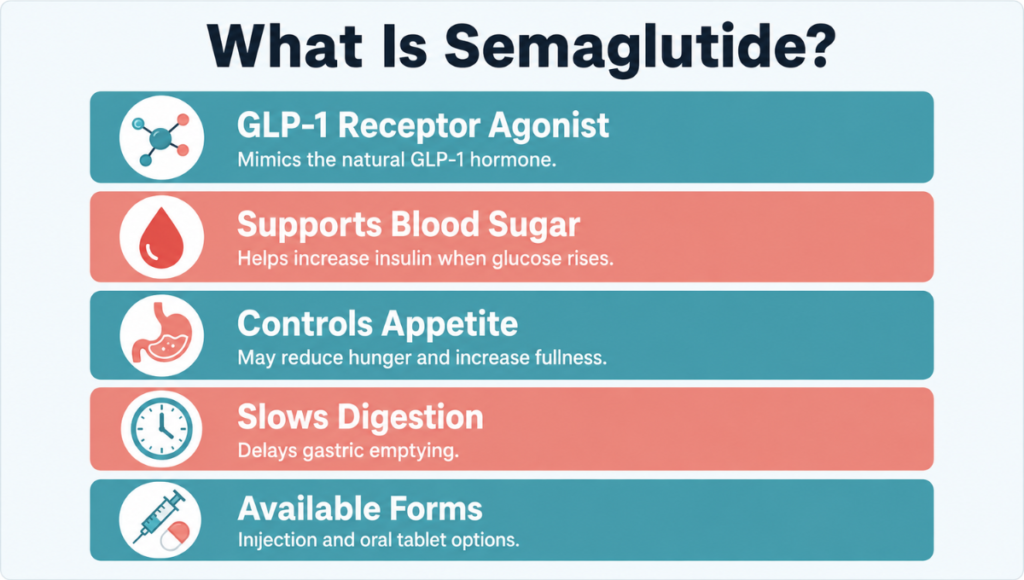
Semaglutide is a member of the glucagon-like peptide-1 (GLP-1) receptor agonists. GLP-1 hormone regulates blood sugar levels and appetite and is involved in the digestive processes.
Semaglutide is a GLP-1 receptor agonist. Semaglutide increases insulin release when blood sugar is elevated, decreases glucagon and gastric emptying, and has an effect on appetite and feelings of fullness. These effects allow for semaglutide to be used in some people with type 2 diabetes and for long-term weight management.
Semaglutide for weight loss is available as an injection and as a tablet. The dosing intervals for the different forms of semaglutide may vary, but some semaglutide preparations can be injected once a week due to its long half-life. The Ozempic injection is a type 2 diabetes blood sugar management medication that contains semaglutide and requires a weekly injection.
How Long Does Semaglutide Last?
To answer the question How Long Does Semaglutide Stay in Your System? depends on factors like your dosage, treatment length, and individual metabolism. However, because of its extended half-life, it may take weeks for it to fully leave your system once you stop taking it. Semaglutide has a half-life of around one week and is in circulation for five weeks after the last dose. According to the FDA prescribing information, some semaglutide may continue to circulate five weeks after the final semaglutide dose.
For higher-dose semaglutide formulations used for weight management, the prescribing information has reported that semaglutide may continue to circulate for five to seven weeks after the final dose. Weight regain after stopping Ozempic is expected as the drug suppresses appetite. This makes the long-term management of lifestyle habits and medical care vital for weight loss maintenance.
Understanding Semaglutide’s Half-Life
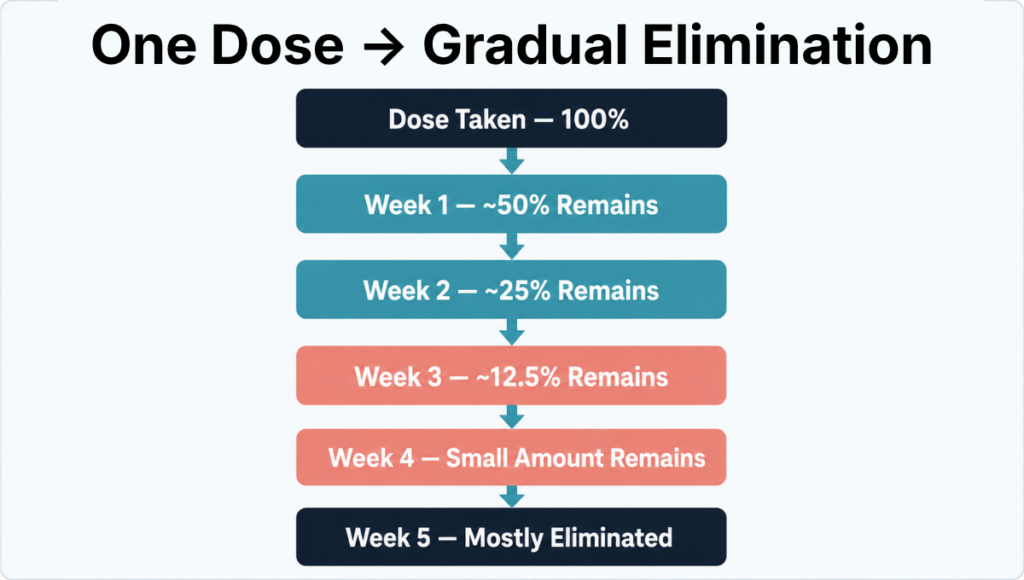
The half-life of a drug is the time needed for its concentration in the body to drop by half. The half-life of Semaglutide is about one week. A simple example to help understand the last semaglutide dose for weight loss:
- 1 week, approximately half of the medication may remain.
- 2 weeks, roughly one-quarter may remain.
- 3 weeks, roughly one-eighth may remain.
- 4 weeks, only a relatively small portion remains.
- After approximately 5 weeks, most of the medication has been eliminated.
Please understand these are only estimates to demonstrate the concept of semaglutide half-life. These numbers are not meant to predict an accurate time course of a particular patient. As Semaglutide takes so long to leave the body, missing a dose does not mean the drug is out of your system.
How Does Semaglutide Maintain Consistent Concentrations Between Doses?
Semaglutide’s purpose is to act for a longer duration. One detail is that semaglutide for weight loss binds to albumin, which is a protein in the blood. It is stated in the FDA labeling that semaglutide is over 99% bound to albumin. This extends the length of time semaglutide lingers in the blood.
It is broken down in the body and will be gradually eliminated. This includes the breakdown of the peptide structure and the breakdown of the fatty acid side chain. The slow elimination is therapeutically advantageous because with semaglutide, the concentrations remain relatively the same between consecutive doses.
How Long Does Semaglutide Work After Your Last Dose?
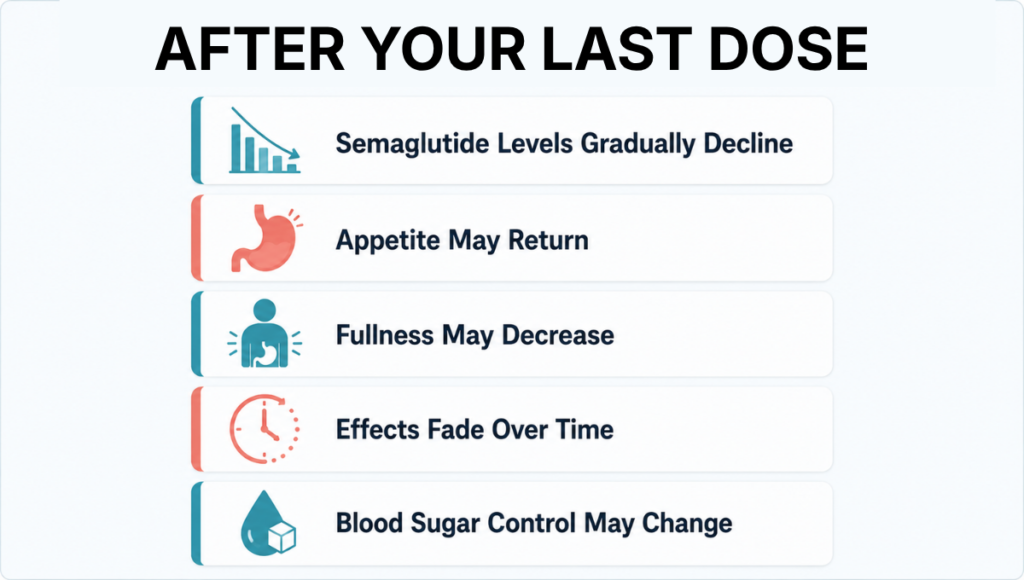
The length of time a medicine is detected in the body is not the same as the duration of time of its noticeable effects. Semaglutide injection concentrations continue to decline post-treatment. Decreasing drug levels result in diminishing effects on appetite, fullness, digestion, and blood glucose control.
Some may notice an increase in appetite relatively quickly after stopping the treatment. Others may notice effects more gradually. Fasting semaglutide patients need to be aware of the fact that their blood glucose may become less controlled.
For this reason, people should not stop prescribed semaglutide because they think that their body still contains enough of the medication for several weeks. If you use semaglutide to control diabetes, discuss any treatment changes with your prescribing doctor before stopping any medication. The semaglutide elimination timeline is prolonged due to its long half-life, prolonging the period of time the drug remains in the body after the last dose is administered.
What Happens When You Stop Taking Semaglutide?
How Long Does Semaglutide Stay in Your System? Since semaglutide gradually leaves the body, its effects will likely decrease over time. After semaglutide treatment is stopped, someone may experience:
- Increased appetite
- Decreased sense of fullness
- Change in how they eat
- Changes in their blood sugar levels
- Digestive symptoms
- Gradually regaining the lost weight
- The body/effects respond differently for everyone.
If a patient has type 2 diabetes, the healthcare professional should be informed about stopping semaglutide. The healthcare professional may need to check blood glucose levels and probably adjust other drugs to manage blood glucose.
What Factors Affect How Long Semaglutide Stays in Your System?
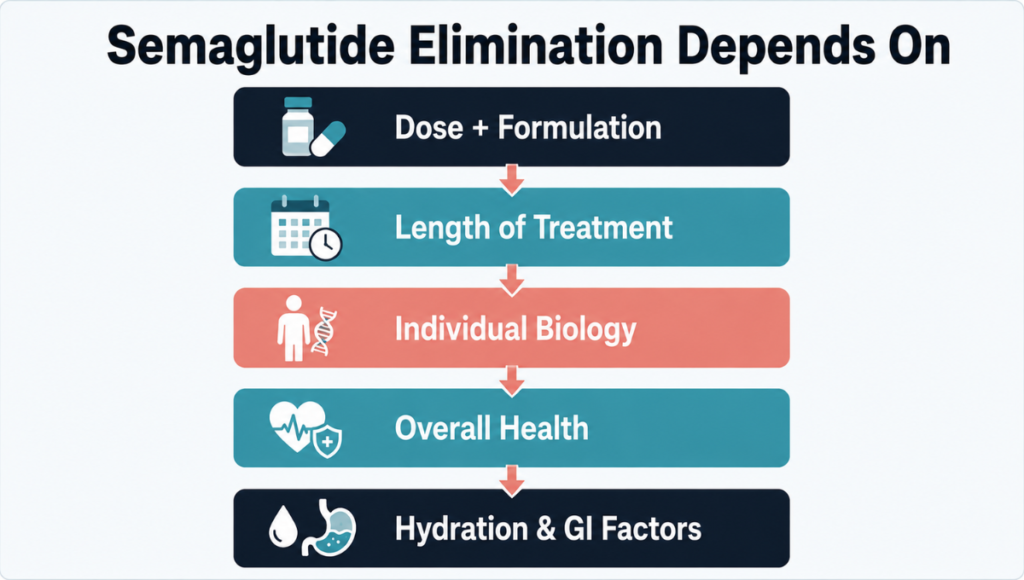
The estimated five-week elimination period is an approximation for the elimination period for all individuals. The duration of drug exposure is highly variable based on the amount of drug administered, the dosage form, the duration and even the formulation of the drug, and on the individual’s biological and health-related characteristics.
Based on the available pharmacokinetic studies, the elimination of semaglutide in patients with kidney impairment does not seem to be clinically relevant. The same can be said for patients with hepatic function and the exposure to semaglutide based on the studies described in the weight-management labeling.
Not exceeding the five-week elimination period does not negate the importance of kidney or liver impairment to semaglutide therapy. It is important to consider factors such as gastrointestinal problems that may contribute to prolonged vomiting or diarrhea, which can lead to dehydration with a subsequent negative impact on kidney function. Many people ask How does semaglutide work for weight loss? By decreasing hunger, increasing the feeling of fullness, and delaying stomach emptying, semaglutide helps to lower caloric intake and achieve weight loss gradually.
How Long Does Semaglutide Stay in Your System After One Dose?
Semaglutide has an approximately one-week elimination half-life, meaning that after one dose, elimination of the drug is slow. Because of this, after one dose, the drug will still be present in the body for a long period, up to weeks. However, the pharmacokinetics after one dose will not be the same as the pharmacokinetics after a prescribed weekly dose.
After regular, weekly dosing of semaglutide, drug concentrations will steadily increase until a standstill is reached, depending on body composition. After prolonged, regular dosing of semaglutide, a patient’s blood semaglutide concentration could be different than that of a patient who only received semaglutide once. Semaglutide’s elimination half-life explains why the drug does not fully clear from the bloodstream within a few days.
Does Semaglutide Show Up on a Drug Test?
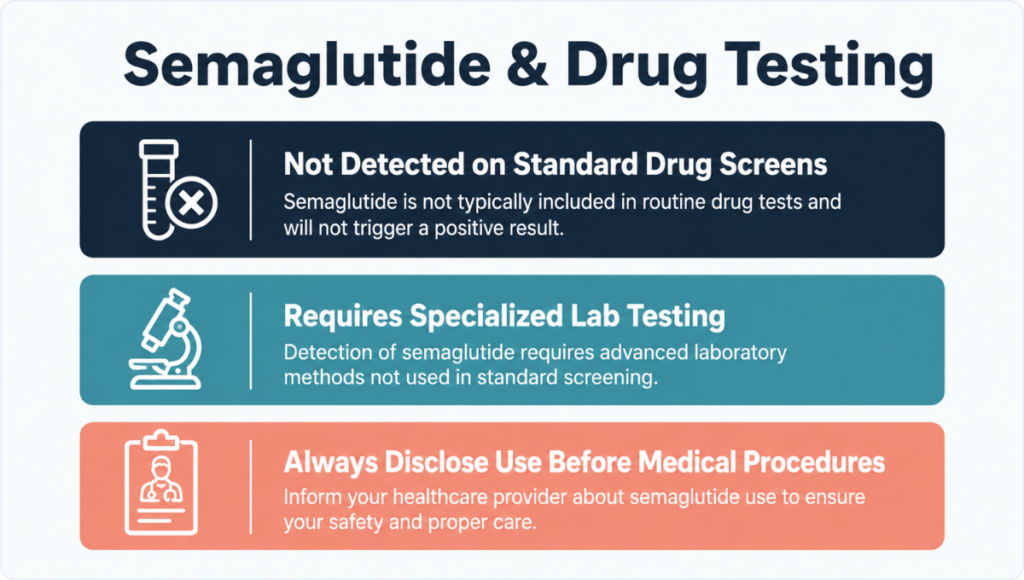
Most workplace and recreational drug screenings test for a limited range of drugs, including opioids, amphetamines, cocaine, certain cannabinoids, and other controlled substances. Semaglutide results are not captured in such screens.
Specialized research or pharmacokinetics labs can measure semaglutide levels in plasma. Researchers typically use these measurements, which differ from routine “drug screens.”
If you have any medical procedures or lab tests scheduled, always tell your healthcare providers that you currently use semaglutide or have used it recently.
Semaglutide and Pregnancy: Why Clearance Time Matters
Planning pregnancy requires mindfulness of semaglutide’s long elimination period.
As things currently are, the FDA advises a semaglutide discontinuation at least two months before planned pregnancy because of the drug’s long half-life and potential impact on the developing fetus.
Of the several weeks quoted as the drug’s circulation period, 2 months offers an additional safety margin for washout. Patients should avoid waiting until they think the medication has cleared in order to become pregnant or discontinue use, and instead should contact their health care provider.
Can Side Effects Continue After Stopping Semaglutide?
They can. Since oral semaglutide can remain circulating for multiple weeks, some medication-related effects might not completely go away immediately after the last dose.
Some gastrointestinal effects from semaglutide can include nausea, diarrhea, vomiting, constipation, stomach discomfort, bloating, and heartburn. While drug concentrations decrease, these effects may improve, but the improvement time can differ for each person.
Do not dismiss serious effects that require medical care as symptoms that will resolve once the drug leaves the body. Semaglutide labeling includes several warnings for pancreatitis, gallbladder disease, severe gastrointestinal effects, and hypoglycemia with concurrent use of certain glucose-lowering drugs.
Are also reasons that require prompt medical care and evaluation. These may include: severe constant abdominal pain, continuous/repeated vomiting, serious effects of dehydration, signs of an allergic reaction, and other concerning symptoms. To understand what happens when you stop taking Ozempic, you may experience a return of your original appetite, weight regain, and fluctuations in blood sugar levels while your body adjusts and Ozempic clears your system.
Shapein RX– Personalized Weight Management Designed Around You
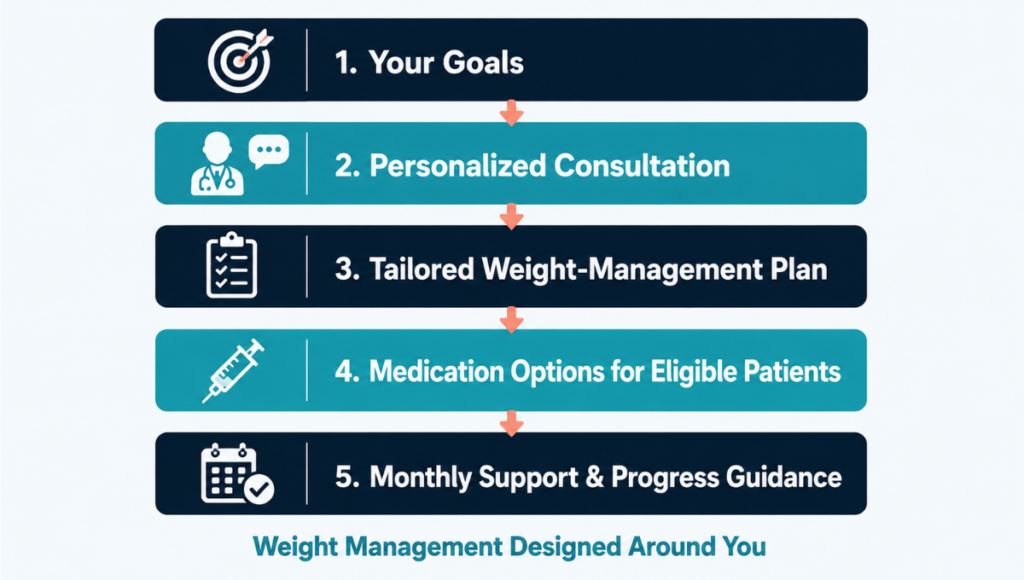
ShapeinRX allows you to manage your weight with flexible solutions tailored to your needs. With ShapeinRX, you get precisely the tools you need to maintain your health and wellness journey. With ShapeinRX, you get suggestions and support for each step of the way to help you build the confidence you need for your health journey. ShapeinRX makes it easy to schedule monthly consultations tailored to meet the needs of your ever-changing schedule. ShapeinRX offers qualified patients the opportunity to manage their weight with the help of Semaglutide and Liraglutide.
Conclusion
Semaglutide has a half-life of around one week, meaning it takes approximately a week for the amount of the drug to drop by half in the body. Generally, the FDA says that semaglutide continues to circulate for about five weeks after the last dose, and some formulations and doses may take five to seven weeks to fully eliminate.
Understanding How Long Does Semaglutide Stay in Your System can help you better understand its effects after stopping treatment. Semaglutide can remain in the body for several weeks because of its long half-life, so its effects may gradually decrease rather than stop immediately.
This long elimination period leads to sustained effects and explains why stopping treatment does not cause immediate changes. The duration of these effects varies from person to person. The dose, formulation, treatment length, individual response, other health conditions, and medications can all play a role.
Most importantly, always consult a medical professional before starting, stopping, or significantly changing semaglutide. Contact us to find next-level personalized weight management. Start your wellness journey today.
FAQS
How Long Do the Effects of Semaglutide Last?
The effects of semaglutide may last for a week. It can take 5 to 7 weeks after your last dose for it to completely leave your system.
Do the Effects of Semaglutide Persist After a Dose is Stopped?
Yes. The effects of the drug may take some time to go away, so appetite suppression, fullness, the functioning of your digestive system, and the management of your blood sugar levels may continue for a while.
How Much Time is Required after Stopping Semaglutide Before Pregnancy?
Semaglutide should be stopped at least 2 months before a planned pregnancy, and pregnancy should be discussed with your doctor.