Summary: GLP-1 medications can help reduce weight, suppress appetite, and regulate blood sugar levels. However, one common side effect is nausea, especially when starting treatment or when the dosage is increased. In this GLP-1 nausea treatment guide, we describe the cause of nausea induced by GLP-1, the duration of this side effect, and the foods and lifestyle interventions that might help, as well as other medically supervised options.
GLP-1 Nausea Treatment: Causes, Relief & Prevention
Semaglutide Nausea | Wegovy Nausea Relief | Nausea Semaglutide
GLP-1 agonists have changed the treatment of type 2 diabetes and obesity by allowing better control of blood sugar and appetite, and leading to GLP-1 weight loss that can be maintained over the long term. While these medications are highly useful, gastrointestinal side effects are common, with nausea being the main issue. For some, other symptoms are more annoying and make it more difficult to continue the treatment to a stop.
The bright side is that while GLP-1 and nausea are quite a bit, a lot can be done to lessen the discomfort. Knowing why the nausea happens, learning to identify situations when symptoms are of normal occurrence, and learning to cope with the nausea can be important in helping and encouraging patients to stick to their treatment plan.
This comprehensive guide contains all important information you need to know for the treatment of nausea induced by GLP-1, such as its causes, viable GLP-1 nausea treatment options, dietary and lifestyle changes options, and symptoms that indicate a need for further medical care and instructions.
What is GLP-1 Therapy?
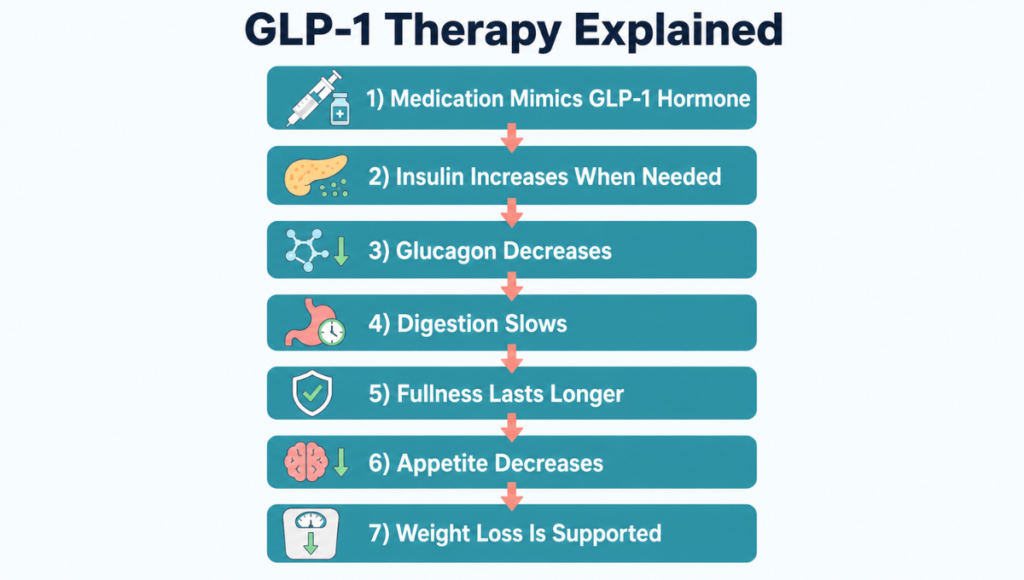
GLP-1 receptor agonists are a class of drugs that emulate a gut hormone that is secreted postprandially. These drugs act by:
- Stimulating the secretion of insulin in response to elevated blood sugar.
- Decreasing the release of glucagon.
- Slowing gastric emptying.
- Increasing satiety.
- Decreasing appetite.
- Promoting weight loss.
Because these drugs slow the digestive processes on purpose, they cause gastrointestinal symptoms for the first few weeks after initiation.
Why Does GLP-1 Cause Nausea?
GLP-1 medicines create nausea because they slow down gastric emptying.
Food in a normal digestive tract moves from the stomach to the small intestine. GLP-1 slows down gastric emptying. GLP-1 aids hunger control and stabilizes blood glucose. <b>GLP-1 side effects are a bit of a trade-off.
- Fullness with small meals
- Stomach Pressure
- Stomach Discomfort
- Loss of Appetite
- Nausea
- Vomiting
The body adapts to the nausea over the course of a month and beyond, so symptoms become less distracting.
How Common is GLP-1 Nausea?
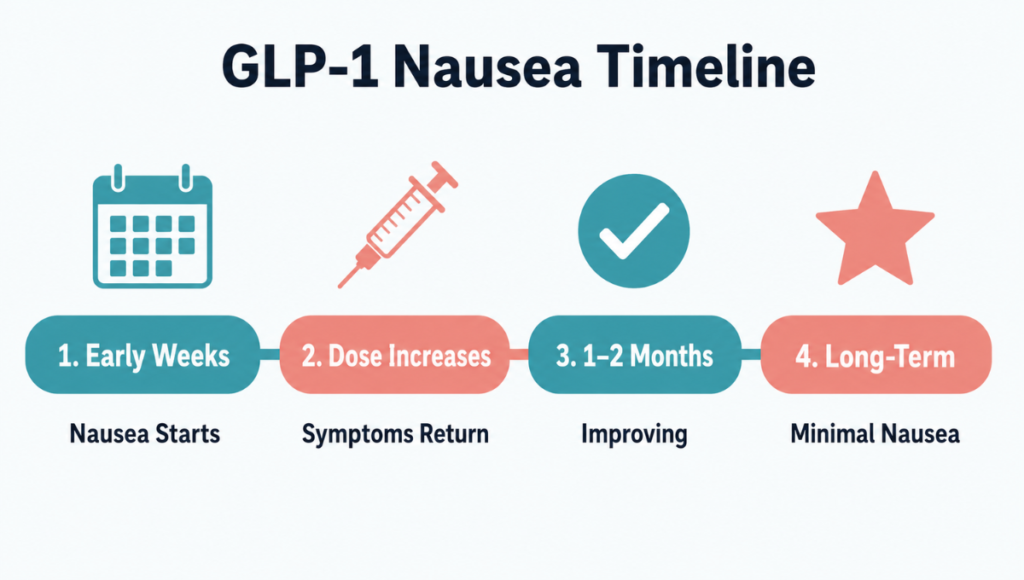
Nausea is one of the most common complaints among GLP-1 therapy patients. For many, the pattern of nausea looks something like this:
- Mild nausea during initial weeks
- Symptoms after each dose increase
- Symptoms are improving after one to two months
- Less nausea after adjustment
Severity is different for everyone. Some may only feel slight nausea while others may need to change their medication.
Symptoms of GLP-1-Related Nausea
Common indications to look out for are:
- Stomach issues
- Nausea after meals
- Satiety
- Excess gas
- Stomach distension
- More discomfort in the abdomen
- Less interest in eating
- Avoidance of foods
- Slight vomiting
- Difficulty digesting foods
Symptoms Continue to Worsen
- When large meals are consumed
- After consuming a high-fat meal
- After consuming too much food
- Soon after increasing the dose
Risk Factors for Developing Nausea
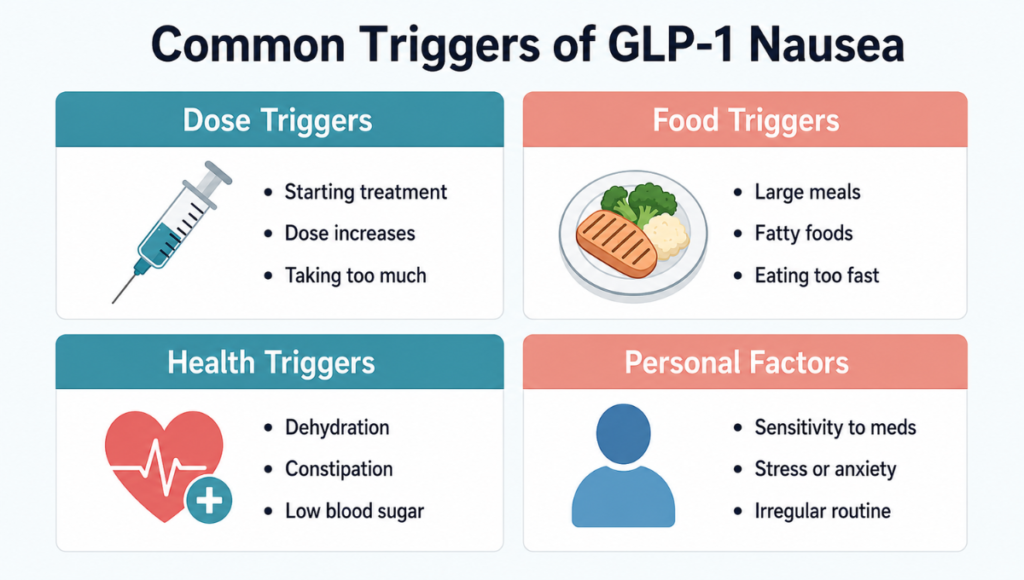
Some individuals are more prone to Ozempic nausea relief. The following are some risk factors:
- Initiating treatment on a higher dose
- Fast dose increase
- Large meals
- High-fat meal
- Gastrointestinal disorders (especially chronic ones)
- History of motion sickness
- Being female
- History of nausea when taking other drugs
How Long Does GLP-1 Nausea Last?
For many patients:
- Nausea develops in the first 1-7 days.
- Nausea is the most intense in the first few weeks.
- Most symptoms resolve over about 4-8 weeks.
- Gradual dose increases can lead to the resurgence of symptoms.
- Severe nausea for several months is a reason to contact a doctor.
Best Dietary Strategies to Reduce GLP-1 Nausea
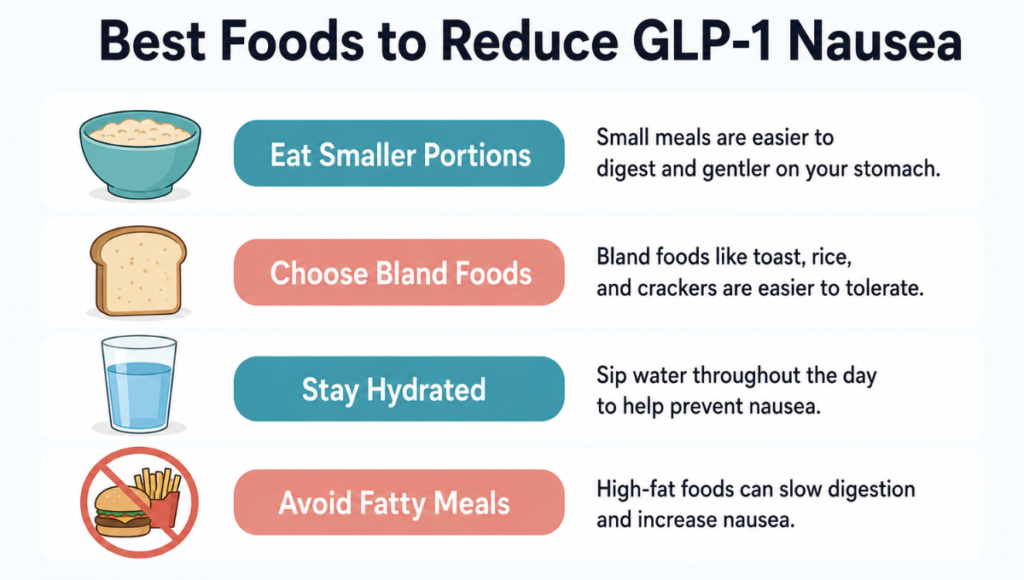
Dietary changes can help manage nausea from GLP-1 medication. Since medications cause delayed gastric emptying, some food habits can help reduce discomfort and increase meal tolerance.
Eat Smaller Meals
Eating fewer larger meals can cause a stretched stomach and an increase in nausea. Aim for a five- to six-meal plan throughout the day. Stop eating when you feel a bit satisfied. Do not eat to the point where you feel full.
Eat Slowly
Eating larger bites and eating without pauses can increase pressure and delay gastric emptying, which can increase semaglutide nausea. To avoid this, take smaller bites, and chew each bite before moving to the next. It can help to take at least 20 minutes to finish a meal.
Choose Bland Foods
When nausea is present, symptoms tend to be less severe with a mild diet. Foods like toast, crackers, rice, and others tend to be better on the stomach and are less likely to irritate astringently.
Avoid Fatty Foods
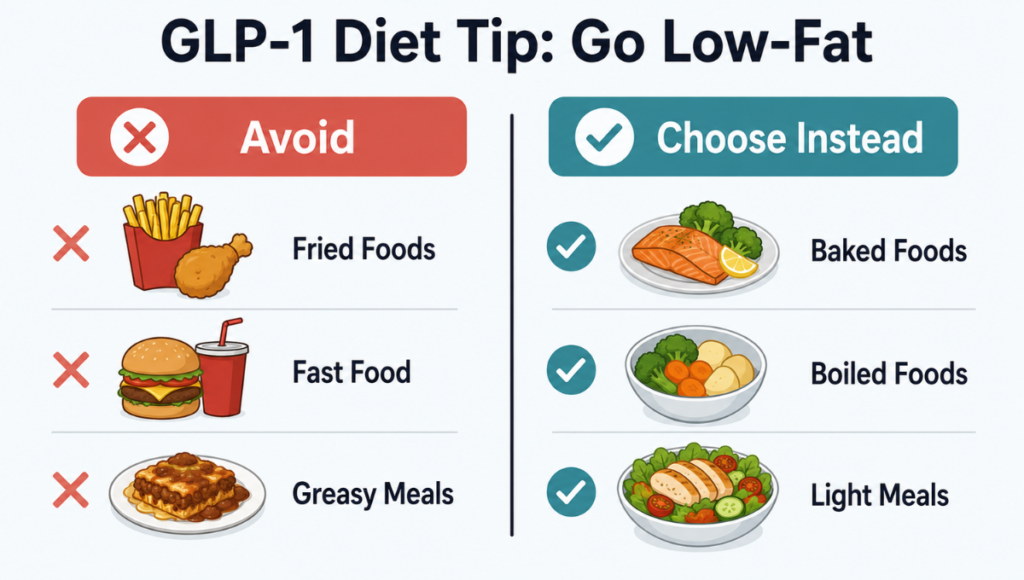
Foods that are greasy and high fat take longer to digest and will only increase the delay in stomach emptying that is caused by GLP-1 medications. Try to avoid fried and fast foods and opt for a boiled and baked diet instead.
Eat Less Spicy Food
Spicy food can irritate the stomach and make nausea, heartburn, and upset stomach worse. Reduce foods with hot peppers, chili sauces, and any other heavily seasoned food. The first few weeks are especially sensitive, as well as after any increased dosages.
Drink More Water
Dehydration makes tirzepatide nausea and dizziness worse. Drink water often, and herbal tea, ice, clear broth, and electrolyte drinks if vomiting. If drinking during meals makes too much food in the stomach, save fluids for after.
Foods That May Help Ease Nausea
These are some foods that naturally calm the digestive system:
- Ginger
- Peppermint Tea
- Plain Yogurt
- Apples
- Dry Cereal
- Rice
- Crackers
- Lean Chicken
- Turkey
- Scrambled Eggs
These fiber-rich foods are also less likely to cause digestive symptoms.
Lifestyle Changes That Improve GLP-1 Nausea
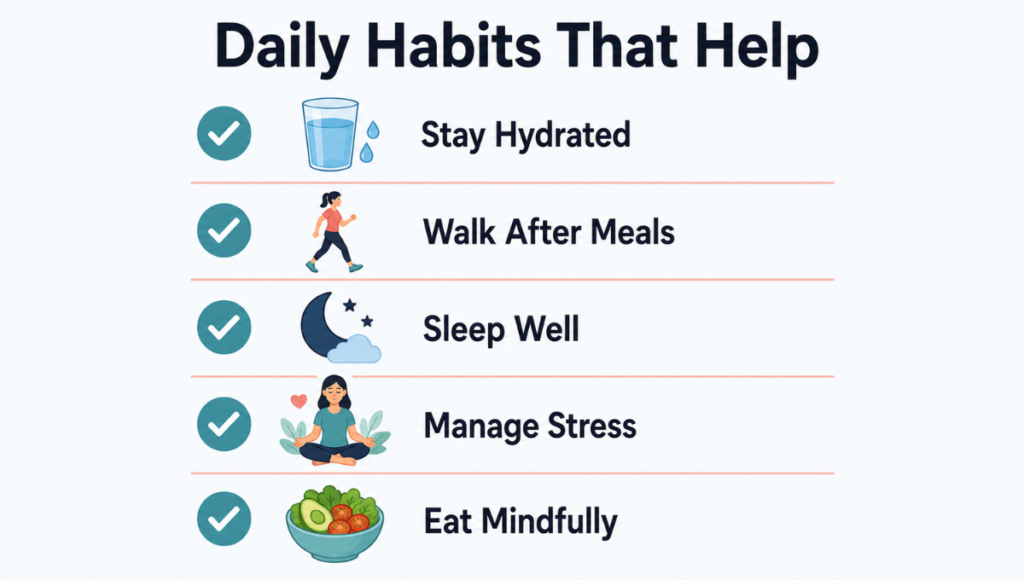
Making lifestyle changes can help manage GLP-1-induced nausea and improve comfort in adhering to treatment.
Stay Upright After Eating
You may notice that after eating a meal, you suffer from symptoms such as nausea or indigestion. Symptoms of acid reflux may also worsen if you lie down after eating. For your comfort and the comfort of others, you should remain standing for one or two hours after eating a meal.
Include Light Physical Activity
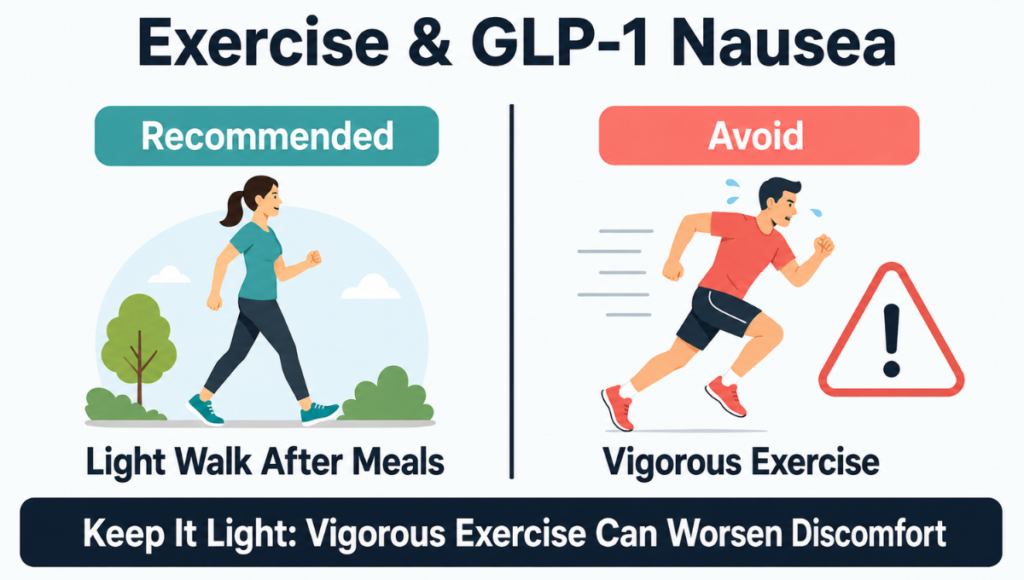
Digestive discomfort, feelings of fullness, or even nausea may be alleviated by taking a mild walk after you eat a meal. Remember that the walk should be mild, as nausea may be worsened and discomfort may be increased from vigorous exercise.
Avoid Strong Odors
While participating in GLP-1 nausea relief, you will notice that strong smells of food or cooking can worsen nausea. Foods heavy in grease, smoke, strong perfumes, and cooking odors are some examples of strong smells. You should try to move away from some of these odors for relief. You could also try to fan some of the odors out.
Manage Stress
Digestive symptoms, including nausea, may be worsened by anxiety. Sleep or deep breathing may help calm the body, and these symptoms may be less severe.
Are Anti-Nausea Medications Ever Needed?
There are times when dietary and lifestyle modifications don’t meet the need. If nausea severely impacts the ability to eat or drink enough fluids, a short course of Mounjaro nausea remedy may be suggested by a healthcare practitioner. As part of a comprehensive GLP-1 nausea treatment plan, prescription medications may help relieve persistent symptoms when used appropriately.
These medications should only be used under medical supervision, as they may not be suitable for everyone and can interact with other medications.
Should You Change the GLP-1 Dose?
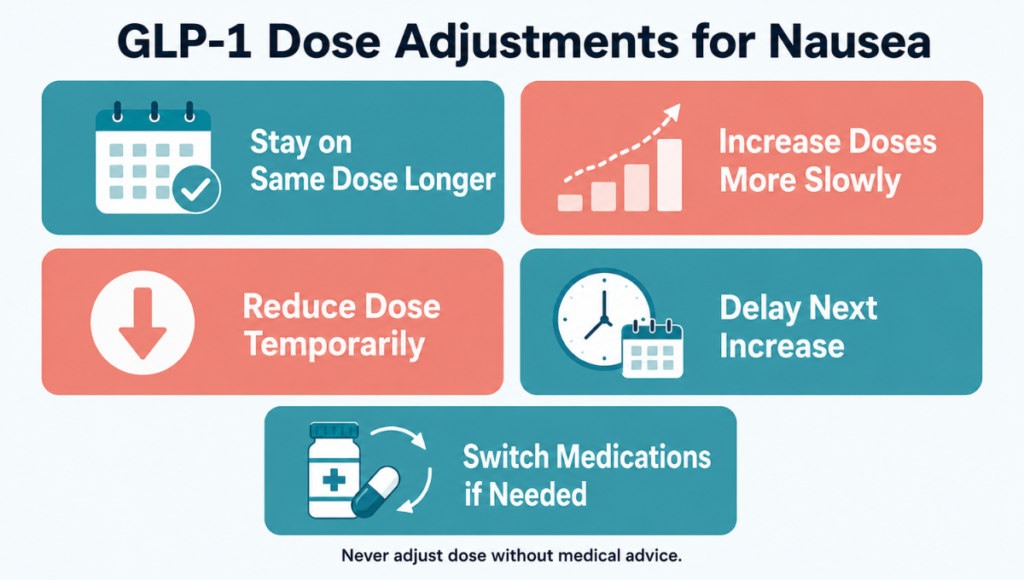
Never adjust your anti-nausea medication dose without medical advice. If nausea becomes difficult to manage, your healthcare provider may recommend:
- Remaining at the current dose longer
- Slowing dose escalation
- Temporarily lowering the dose
- Delaying the next increase
- Switching to another GLP-1 medication if necessary
Many patients improve with a slower titration schedule.
What Should You Eat on Injection Day?
To answer the question of how to stop nausea, bloating, and other stomach issues, a smaller meal around the time of your GLP-1 injection may help. Things like oatmeal and toast are very easy to digest, as well as more typical foods that include rice, chicken, yogurt, and fruit. More protein and even some veggies can help as well. Eating smaller meals throughout the day may be helpful, but be sure to eat these meals at your own pace. Stop once you’ve reached your desired fullness level.
Things to Avoid to Prevent Discomfort
Your body may react negatively to foods that have more digestive pressure, and it will certainly worsen nausea. Foods with higher fat content like fried foods and also bigger meals like buffets should be avoided at all costs. Alcohol is also very problematic and can worsen nausea for the same reason. Keeping foods simple and in smaller portions will help negate nausea and also make you more comfortable after your injection.
When Is Nausea a Medical Emergency?
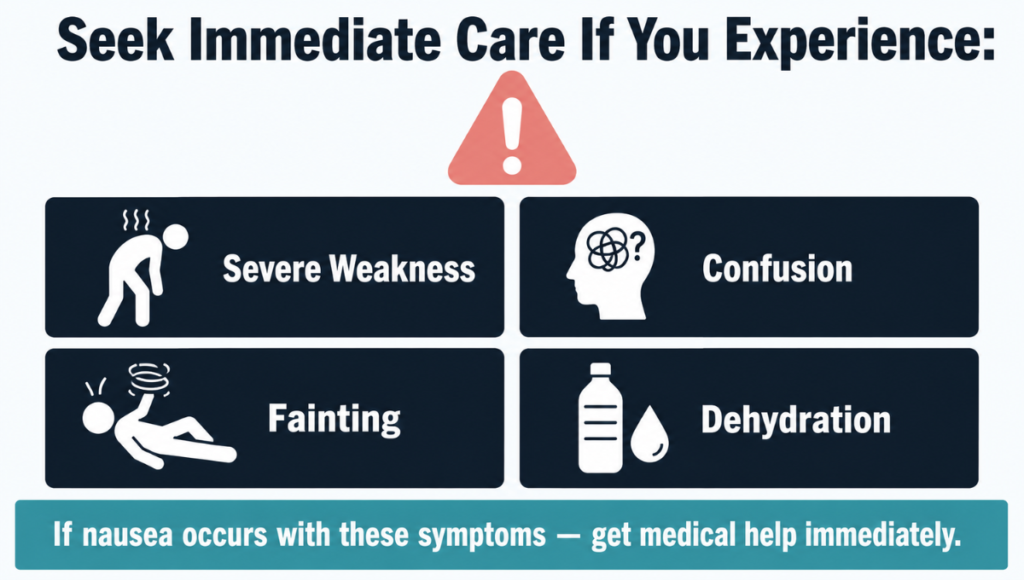
Nausea can be an inconvenient and uncomfortable experience but is often harmless. However, more serious symptoms should be evaluated by a medical professional immediately. These symptoms include:
- Severe abdominal pain.
- Nausea and vomiting (inability to keep fluids down).
- Bloody vomit or black stools.
- Signs of dehydration.
- High fever.
- Nausea and severe weakness or vomiting and severe weakness.
- Vomiting and confusion.
- Vomiting and fainting or nausea and fainting.
- Vomiting and/or nausea and weakness and fainting.
These symptoms are troublesome on their own, but in conjunction with nausea and/or vomiting, you should seek immediate help.
Can You Prevent GLP-1 Nausea?
Although there are times when nausea is unavoidable, there are certain practices that can decrease the chances as well as the intensity of the symptoms. Some useful preventive practices are:
- Beginning with the lowest recommended dose
- Adhering to the prescribed dose increase schedule
- Eating at a slower pace
- Consuming smaller portions
- Drinking adequate amounts of water
- Reducing fatty and greasy meal options
- Preventing large meal consumption
- Staying upright for a while after meal consumption
- Having a regular eating schedule
Does Nausea Mean the Medication Is Working?
Not always. While nausea is one of the common semaglutide side effects and a hallmark of the medication, nausea does not equate to better medication efficacy or more weight loss. Some achieve better blood sugar and weight loss with no nausea, while some may suffer with nausea and still see minimal results. Because treatment response is so dynamic, the presence or absence of nausea cannot serve as a measure for medication efficacy.
Tips for Staying on Treatment
Several patients can maintain their GLP-1 therapy after making a few minor changes in the way they cope with their symptoms. Listed below are some suggestions to avoid GLP-1 side effects:
- Make a note of what you eat to help identify what triggers your symptoms.
- Make sure you eat something before you get too hungry.
- Pack something plain and dry with you when you travel.
- Keep your fluid intake consistent.
- Do not leave food out, or you will miss a meal.
- Do not change the scheduled meal/course interval your provider has set.
- You should consult your provider if symptoms increase in severity.
Shapein RX– Personalized, Accessible, and Sustainable Wellness

We strive to provide better personalization and accessibility for sustainable weight management. And we know that permanent wellness cannot be achieved through temporary measures, extreme limitations, or complicated long-term commitments. We designed a flexible, month-to-month commitment to your health goals that reflects your lifestyle and progress. Our program includes safe and effective GLP-1 medications, Semaglutide and Liraglutide, to manage weight, reinforce healthy, sustainable habits, and build your confidence throughout your wellness journey.
Conclusion
Nausea is one of the most prevalent GLP-1 medication side effects. It can be uncomfortable, but is often only a temporary issue. Knowing the background behind the side effect, employing wise diet choices, etc., can alleviate the issue. Many people can expect nausea during the first few weeks of treatment; however, a healthcare provider should evaluate nausea that is severe or otherwise concerning. With the right GLP-1 nausea treatment, most people can manage symptoms effectively and continue their weight loss journey with confidence. It is possible to manage the issue of nausea, and in turn, people can take advantage of the other benefits that GLP-1 therapy can provide. Start your wellness journey with confidence. Contact us today to discuss a personalized weight management plan designed around your unique needs and lifestyle.
FAQS
How Often Is It the Case for People to Get Nauseous While Using GLP-1s?
Yes. Some people will experience mild nausea when starting the treatment for the first couple of weeks. This happens because GLP-1s slow down the speed at which the stomach digests and empties food. Some of the symptoms and side effects with time.
As You Take GLP-1s, What are Some Recommended Foods to Deal with Nausea?
As you start the treatment, you should stick to more bland, easy-to-digest foods like crackers, rice, bananas, oatmeal, applesauce, and even broths and lean soup. These are foods that should be safe to eat and digest easily, and then eventually, you should start treating the nausea with frequent meals.
When Should Nausea From GLP-1s Sound the Alarm?
You can see your doctor if you are still nauseous and you can not eat or drink because you are vomiting. Your case will be worse if you have abdominal pain, are dehydrated and faint, or if you see blood.